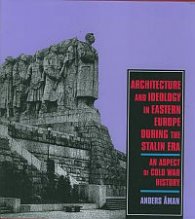
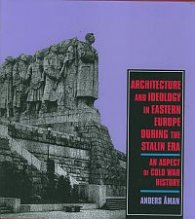
Architecture and Ideology in Eastern Europe During the Stalin Era - An Aspect of Cold War History
Автор: Anders Aman
| Издател | MIT Press |
| Брой страници | 296 |
| Година на издаване | 1993 |
| Корици | твърди |
| Език | английски |
| Тегло | 1026 грама |
| Размери | 24.5x22.6 |
| ISBN | 9780262011303 |
| Баркод | 9780262011303 |
| Категории | Хуманитарна литература на чужди езици, Хуманитарни науки, Книги |
Since 1978, Anders Aman has been researching, photographing, and documenting the architectural style known as Socialist Realism. In the midst of the current statue toppling, this book records in over 200 illustrations the government-planned buildings, cities, parks, and monuments from the Stalinist postwar period in Eastern Europe, providing a valuable record and analysis of the relation between architecture and the state in Poland, Czechoslovakia, Hungary, Romania, Bulgaria, and former East Germany. Very little has been written on architecture and politics during the Cold War period for any country, and next to nothing is known about the architecture, or about state policies reflected in the architecture, of Eastern Europe.
Aman not only illuminates these issues but also reveals the influence they had on the course of architectural history in the West. Following an overview of the Stalinist era and the ideological spread of Socialist Realism, Aman investigates several buildings in detail - monumental structures such as the Palace of Culture in Warsaw and Stalinallee in East Berlin - and the socialist cities of Stalinstadt, Nowa Huta, Sztalinvaros, and Dimitrovgrad. Sketching the lives of eight selected architects, he illuminates how their profession was affected by Socialist Realism.
Aman also takes up such political works of art as the influential Polish painting "Pass me a brick!" and the Stalin monuments in Budapest and Prague, noting that even as history is being obliterated, Socialist Realism remains a key to understanding pictorial art and the built environment in Eastern Europe. He concludes with a discussion of how architecture is related to political ideologies.
Все още няма мнения за тази книга.
Напиши коментарЩе бъдат допускани само мнения свързани с конкретния продукт или автор.
Ще бъдат изтривани мнения:
- Съдържащи обидно или нецензурно съдържание
- Написани само с главни букви
- Написани на латиница
- Съдържащи препратки към други сайтове.
Други въпроси и мнения моля, изпращайте на [email protected]