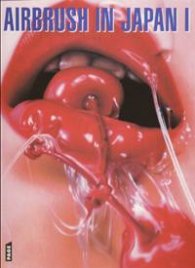
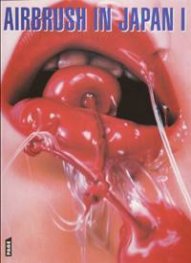
Airbrush in Japan I
Автор: Колектив
| Издател | Page One Publishing |
| Брой страници | 78 |
| Година на издаване | 1993 |
| Корици | меки |
| Език | английски |
| Тегло | 350 грама |
| Размери | 30x22.5 |
| ISBN | 9810047738 |
| Баркод | 9810047738 |
| Категории | Албуми с репродукции, Изобразителни изкуства, Изкуство, Книги |
The airbrush technique was invented by Charles Burdick as long ago as 1893, and is thus by no means such a new medium as one might be inclined to think in view of the bright, mostly super-realistic pictures produced en masse today via an airbrush. (The airbrush or spray-gun is used to discharge liquid paint by means of air pressure. Altering the setting enables one to apply the paint to the surface in a finer or coarser jet.)
At the beginning of this century, the airbrush technique was employed primarily as a means of touching up photographs. It was later to establish an important position for itself in advertising graphics and technical illustrations. However, it was not until two important art movements of our century - the Bauhaus in the 1920s and 1930s, and especially Pop Art in the 1960s - that the airbrush technique also became accepted as an artistic medium. Pop Art decisively altered the iconography of 20th-century art. Thereafter, the artists of hyper-realism, who copied photography with artistic means, found it relatively easy to gain acceptance. They were the first to make intensive use of the airbrush technique for purposes of artistic creation.
Anyone who has had experience of the airbrush technique is aware that the spray-gun is no magic wand, permitting one to conjure up who e pictures on empty walls in a second or two. Michael English, one of the leading contemporary airbrush artists, also points this out, adding that the spray-gun "is a 'brush', although one which does not paint as such but applies its paint like rays of light. A fantastic property. Yet it is precisely this aspect which disturbs certain critics. They take exception to the fact that the airbrush user lacks any 'substantial1 contact with the canvas, and accordingly disqualify the work thus produced as impersonal, assigning it a position outside of art." It is amazing how stubbornly objections presumably expressed with regard to a particular kind of picture are then applied to the medium with which such pictures have been created.
Whether it is a question here of art or not, the work by Japanese illustrators on display in this volume reveals the wide range of possibilities open to the airbrush user - and, in particular, the high level of perfection which can be attained within the realistic or hyper-realistic reproduction of objects with the spray-gun. Smooth and polished surfaces with light reflecting off them or drops of water forming beads, complex variations of light and shade, and complicated creases and fold arrangements seem especially suited to this medium. Japanese industry enjoys a high reputation on account of its high-tech products; the illustrators also do justice to this reputation in their depictions of the products in question. The construction drawings by Hisashi Saito and Hideaki Kodama of complicated technical apparatus reveal that the Japanese are among the masters of their craft, especially in this area.
Many of the illustrations contained in this volume are commissioned works, serving a particular purpose - generally that of advertising. Some works by Makoto Kawahara, IkuoTakeda and Yosuke Onishi reveal the extent of variety in the appeal of sexual depiction, provocation and suggestion exploited by product advertizing. One cannot touch upon this context without mentioning the Sexy Robots of Hajime Sorayama, which have become a universal prop of advertising worldwide. They are true icons of the millennium that is now drawing too close, produced by the mating of the insatiable consumer-world with the cyber-world that is overtaking us.
Все още няма мнения за тази книга.
Напиши коментарЩе бъдат допускани само мнения свързани с конкретния продукт или автор.
Ще бъдат изтривани мнения:
- Съдържащи обидно или нецензурно съдържание
- Написани само с главни букви
- Написани на латиница
- Съдържащи препратки към други сайтове.
Други въпроси и мнения моля, изпращайте на [email protected]