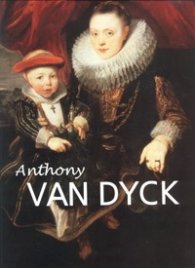
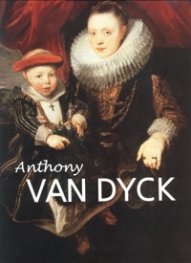
Anthony Van Dyck
Автор: Natalia Gritsai
| Издател | Grange Books |
| Брой страници | 160 |
| Година на издаване | 2006 |
| Корици | твърди |
| Език | английски |
| Тегло | 1324 грама |
| Размери | 33x25 |
| ISBN | 1840135808 |
| Баркод | 1840135808 |
| Категории | Албуми с репродукции, Изобразителни изкуства, Изкуство, Книги |
To this day the name of the seventeenth-century Flemish painter Anthony van Dyck (1599-1641) remains a symbol of artistic refinement. Yet his real contribution to art lies in his novel approach to the representation of the subject, his perception of each human being as a unique individuality which reveals itself only on direct contact, not through mere contemplation. In his day Van Dyck had his greatest success as a portraitist. He created painted portraits throughout his life, and in his later periods graphic portraits as well. It was as a portraitist that the artist gained worldwide recognition and went down in the history of seventeenth-century European art.
As an artist of great creative range, however, Van Dyck worked in many genres: he produced historical compositions, allegorical pictures, landscapes - and was well able to tackle any artistic task. And if his thematic compositions often display a portraitist's power of observation, his portrait style bears the mark of the techniques used in historical pictures.
Van Dyck's portraits are of diverse type. The range of his powers as a portraitist seems infinite, stretching from fleeting sketches done on the move or from memory to painstaking studies from life, from intimate works to grand, monumental portraits and often humorous "historical pictures" depicting the subject in the guise of a character from classical mythology or a contemporary play. The artist's portrait gallery is a real monument to his time, and presents us with both a living image of the artist's
contemporaries and that ideal of the beautiful individual which he established in his art...
Van Dyck's age marked a new stage in the art of the small country of the South Netherlands (often called Flanders, after its largest province). It was a time that saw the development, followed by the brilliant affirmation, of the national school of painting. The Dutch rebellion of the late sixteenth century led to the secession of the northern provinces (Holland) to become the independent republic of the United Provinces, while the southern provinces remained under Spanish rule. Netherlandish art split into two independent national schools - the Dutch and the Flemish.
The greatest achievements of seventeenth-century Flemish art are linked with Rubens and his close associates, of whom Van Dyck was indisputably the finest. Peter Paul Rubens (1577-1640) was the recognized leader of the Flemish School. He set Flemish culture on new paths by creating art that was closely in tune with its time, art that was imbued with a sublime humanist spirit, vividly emotional, dynamic, passionate, bursting with life-affirming power. Van Dyck transformed Rubens' artistic discoveries in his own special way, attaining a skill in portraiture that remains unmatched.
The Hermitage collection (with which this publication mostly concerns itself), supplemented by some of the master's pictures in other museums, allows us to form a comprehensive picture of Van Dyck's portrait oeuvre. It includes works from all the artist's creative periods: the First and Second Antwerp Periods, the Italian Period, and the English Period, forming one of the largest sections in the Hermitage's collection of Flemish art, which also features important paintings by other leading Flemish masters - Rubens, Jordaens, and Snyders. All of these collections belong to the core of the Museum's old collection dating from the eighteenth century, a time when the works of Flemish painters were ranked as some of the most coveted items in Western Europe. They were particularly in demand in Paris - Europe's most important art market. From the 1760s almost to the end of the century, the French capital was the principal source of paintings for the rapidly expanding picture gallery of St Petersburg's Hermitage.
Все още няма мнения за тази книга.
Напиши коментарЩе бъдат допускани само мнения свързани с конкретния продукт или автор.
Ще бъдат изтривани мнения:
- Съдържащи обидно или нецензурно съдържание
- Написани само с главни букви
- Написани на латиница
- Съдържащи препратки към други сайтове.
Други въпроси и мнения моля, изпращайте на [email protected]